King George III of Great-Britain (1738-1820) had always been a family man with strong moral principles, but, during his recurring bouts of 'madness', he developed an embarrassing fancy for a respectable grandmother of over fifty. His doctors had him strapped into a strait-jacket, which worsened his condition. They didn't realise that George suffered from a rare hereditary disease causing excruciating pains.
Youth
George III was born on June 4, 1738. His mother was Augusta of Saxe-Gotha
(1719-1772) and his father was the Crown-Prince Frederick (1707-1751), who was known as
"Poor Fred", because both his parents hated him. His father, George II, called
Frederick "the greatest villain that ever was born", his mother,
Caroline of Ansbach, called him "the greatest ass, and the greatest beast in
the whole world" and his sister Caroline (1713-1757) wished that "he
may die and that we may all go about with smiling faces and glad hearts".
Nevertheless, Frederick was a much better father for George than his father had been for
him. He loved music and encouraged his children to appreciate it. He engaged reasonably
competent tutors for his sons and they were taught Latin, French, German, history,
mathematics and religion. The tutors found George a difficult pupil, not exactly
unwilling, but lethargic and incapable of concentration. At times he was silent and
morose and when he was angry, he became obstinate and sullen. At twenty he still wrote
like a child.
In March 1751 Prince Frederick caught a chill and died soon afterwards. His widow became a
rather possessive mother to the children. Her friend and adviser was the vain and pompous
John Stuart (1713-1792), Earl of Bute, who was regarded as "extremely handsome".
According to Horace Walpole (1717-1797) "the beauty of his leg was constantly
displayed in the eye of the poor captivated Princess". George implored Bute to
help him and Bute never hesitated to mark his faults or to remind him of the immense
responsibility of his calling. So when George succeeded his grandfather in 1760, he took
Bute's advice on every matter, ignoring other ministers with decades of political
experience.
Marriage
Like his predecessors,
George was a sensual man. He appreciated feminine beauty, but his high sense of morality
would not allow him to indulge in his fancies.
 In 1759 George fell in love with 15-year old Sarah Lennox (1745-1826), a daughter
of the Duke of Richmond1. He longed to marry her,
but Bute said "no" and dutiful George obeyed,
although his infatuation continued for some years. He told Bute: "It is
entirely owing to a daily increasing admiration of the fair sex which I am attempting with
all the philosophy and resolution I am capable of to keep under...".
Persistent rumours maintain that on April 17, 1759 George had secretly married a quakeress
called Hannah Lightfoot, who is said to have borne him three children. However, if this
were true, his subsequent official marriage would have been bigamous and it is unthinkable
that a decent and dutiful monarch with high morals like George III would have contracted a
bigamous marriage. In 1761 George III settled hastily on ugly Charlotte of
Mecklenburg-Strelitz (1744-1818, to the right). With her large mouth, flat nose and
swarthy complexion, she had been nicknamed "monkey face". Plain and undesirable
as she was, George III fulfilled his marital duties in the same conscientious way as he
fulfilled his kingship, and they bred 15 children. The first, later George IV (1762-1830),
was born eleven months after the wedding.
In 1759 George fell in love with 15-year old Sarah Lennox (1745-1826), a daughter
of the Duke of Richmond1. He longed to marry her,
but Bute said "no" and dutiful George obeyed,
although his infatuation continued for some years. He told Bute: "It is
entirely owing to a daily increasing admiration of the fair sex which I am attempting with
all the philosophy and resolution I am capable of to keep under...".
Persistent rumours maintain that on April 17, 1759 George had secretly married a quakeress
called Hannah Lightfoot, who is said to have borne him three children. However, if this
were true, his subsequent official marriage would have been bigamous and it is unthinkable
that a decent and dutiful monarch with high morals like George III would have contracted a
bigamous marriage. In 1761 George III settled hastily on ugly Charlotte of
Mecklenburg-Strelitz (1744-1818, to the right). With her large mouth, flat nose and
swarthy complexion, she had been nicknamed "monkey face". Plain and undesirable
as she was, George III fulfilled his marital duties in the same conscientious way as he
fulfilled his kingship, and they bred 15 children. The first, later George IV (1762-1830),
was born eleven months after the wedding.
Marriage and fatherhood helped George to overcome his sense of insecurity. He was interested in music and the technique of agriculture. He created model farms at Windsor,
which earned him the nickname of "Farmer George". With his collection of books and manuscripts, he laid the foundation of the future British museum library. In addition, he collected drawings, coins, medals, watches and model ships. Queen Charlotte was interested in music too, and could perform on the clavichord. She was well read in history and had some knowledge of botany, but she was particularly skilful with her needle. In his concern to shield his wife from outside influences and intrigues and his determination that she should be wholly devoted to him alone, George kept Charlotte as much as possible from making acquaintances in her new fatherland. George enjoyed a quiet evening at home and by 10 o'clock the Royal couple would go to sleep.
Their court was reputed to be the dullest in Europe.
In 1762 George was ill from January until July, suffering from fever, coughing, a rapid pulse, insomnia and loss of weight. In January 1765 George suffered from "a violent cold", insomnia and stitches in his breast. At times George felt better, was cheerful and good-humoured; but he was recurrently stricken by new relapses. Early 1766 he had
another relapse, but soon afterwards he made a full recovery. Apart from these illnesses,
George enjoyed excellent health and kept his figure trim by a spartan diet and plenty of
exercise.
Lord Bute lacked both confidence and powerful friends and the power struggle undermined
his health until he at last gave up. George III changed ministries frequently, but from
1770 onwards he found a dependable friend in Frederick North (1732-1792), allegedly the
worst prime minister in British history. As George III matured and slowly learned to rule,
his opinions became more rigid. He had always regarded the burdens of governing as a sacred, but dreadful obligation imposed on him by the Almighty, and opposition to his
policy enraged and embittered him. In 1775 the American War of Independence broke out. The American colonists protested against repeated attempts to impose taxes on them and their
anger found outlets in incidents like the "Boston Tea Party" in 1773. George's American policy was to force the colonists to absolute obedience, but the colonists
proclaimed their independence on July 4, 1776 and achieved it at the Peace of Versailles
in 1783. The same year arrogant 24-year-old William Pitt the Younger (1759-1806) entered
the political arena and he was to be prime minister with only one break (1801-4) until his
death.
Family
In 1764 George gave his domineering sister Augusta (1737-1813) in marriage to the coarse and brutal Charles II of Brunswick (1735-1806). The marriage was unhappy and of their sons the eldest was "passive in intellect", the second was "a complete imbecile" and the third was "nearly blind". Even worse was the marriage of George's youngest
sister Caroline Mathilda (1751-1775) to the insane Christian VII of Denmark (1749-1808); it ended in disgrace and divorce. In 1765 George's brother
Frederick died at the age of 15. Two years later George's favourite brother Edward died at the age of 28.
His surviving brothers, William of Gloucester (1753-1805) and Henry of Cumberland (1745-1790), married ladies considered by George as entirely unsuitable. Then
George introduced the Royal Marriages Act that provided that no Royal under the age of 25
was allowed to contract matrimony without first obtaining the consent of the sovereign,
while Royals above that age needed approval from Parliament.
George III was a devoted father, but he lacked imagination. He gave instructions that
discipline should be strict, and punishment severe. He kept the boys close, while the
girls were ruled with an iron hand by Queen Charlotte. The Princesses were intensely
over-protected, secluded from the world and kept from all contact with eligible males of
their own age. When the King entered a conversation with one of his daughters, the
Princess was expected to stand up and to remain silent unless asked a question. When he
dismissed her, she had to leave the room walking backwards. Despite the formality, George
really did love his children. When Prince Alfred died in 1782 before the age of 2, George
was deeply distressed, and when Prince Octavius, of whom he had been especially fond, died
the following year at the age of 4, he was heartbroken.
Disease
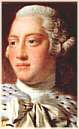 In 1788 George III's 12-year-old daughter Mary (1776-1857) was ill with "spasms"
for months. In August her 15-year-old brother Augustus (1773-1843) fell ill in Hanover with symptoms like insomnia, fast pulse, obstinate constipation, headache, giddiness, great exhaustion, muscular weakness and excruciating pain in the chest. The attacks waxed and waned for about 8 weeks, during which his doctors feared for his life. The doctors observed that during his four major attacks his urine was coloured "reddish-brown" or "deep amber". Each time when the attack had subsided, the colour returned to normal.
Dr. J.G. von Zimmerman (1728-1795) reported to George III that Augustus' condition resembled closely the illness
of his brother Frederick in 1783. By October Augustus was slowly recovering, but he had
lost much weight and was still weak.
In 1788 George III's 12-year-old daughter Mary (1776-1857) was ill with "spasms"
for months. In August her 15-year-old brother Augustus (1773-1843) fell ill in Hanover with symptoms like insomnia, fast pulse, obstinate constipation, headache, giddiness, great exhaustion, muscular weakness and excruciating pain in the chest. The attacks waxed and waned for about 8 weeks, during which his doctors feared for his life. The doctors observed that during his four major attacks his urine was coloured "reddish-brown" or "deep amber". Each time when the attack had subsided, the colour returned to normal.
Dr. J.G. von Zimmerman (1728-1795) reported to George III that Augustus' condition resembled closely the illness
of his brother Frederick in 1783. By October Augustus was slowly recovering, but he had
lost much weight and was still weak.
In June George III suffered from a violent bilious attack and in the next two months he took the waters at Cheltenham. Even there the day's programme was strenuous. George went to take the waters at 6 o'clock in the morning. Afterwards he went for a walk until 8:30, when he had breakfast. At 10 o'clock the carriages appeared and the Royal family set off for a day's sightseeing. Dinner was at 4 o'clock, followed by more walking from 6 to 7 o'clock and tea until 10 o'clock, when they ate their supper. At 11 o'clock the Royals retired to their bedrooms for less than 6 hours of sleep. The King was tireless and in
high spirits.
On October 17, George III suffered another bilious attack during the night and asked for
opium to ease the pain. In the preceding days he had had dark coloured urine. His physician, Sir George Baker (1722-1809), wrote: "He complained of a very acute
pain in the pit of the stomach shooting to the back & sides, and making respiration difficult & uneasy." George complained of a rash, rheumatism and cramp in
the leg muscles. Fanny Burney (1752-1840), the Queen's Keeper of the Robes, wrote on October 26, 1788: "he stopped me, and conversed upon his health near
half-an-hour, still with that extreme quickness of speech and manner that belongs to fever; and he hardly sleeps, he tells me, one minute all night; indeed, if he recovers not
his rest, a most delirious fever seems to threaten him. He is all agitation, all emotion, yet all benevolence and goodness, even to a degree that makes it touching to hear him
speak." His limbs were stiff and painful and his incessant talking - for hours
on end - made him hoarse. He complained that both his vision and hearing were affected.
On November 5, the King became more confused and incoherent, while still talking incessantly, and at dinner he lost control and had a delirium. The Queen became hysterical and with difficulty George was persuaded to allow his wife to sleep in a separate room that night on the grounds that she was not well. The doctors thought that His Majesty suffered from gout, which had first attacked his feet, but "had flown to his brain and lodged there", so blisters were applied to his head in the hope of driving it down again. At times George was extremely agitated, uttering staccato shouts of "What! What! What!", perspirating and complaining of burning. Sometimes he was foaming with rage. At other times he was sunken into a deep melancholia. Still he had
flashes of good sense.
The Royal family moved from Windsor to Kew on November 30, because it had a private garden where the King could not be seen by passers-by. Dr. Francis Willis (1718-1807) was
summoned. He was a clergyman with a reputation for treating the insane at his private asylum. Whenever the King refused his food, either because he found it difficult to
swallow or because he had no appetite, whenever he became too restless to lie quietly down on his bed, whenever the terrible pain from his septic and suppurating blisters was such
that he thrashed about and tore off the badges, whenever he sweated so much that he threw off his bedclothes2, Willis had him strapped into a
strait-jacket with a band across his chest and his legs tied to a bedpost. When he used foul or obscene language, he was gagged. Once he tried to sexually assault a housemaid and
he developed a fancy for Elizabeth Spencer, Countess Pembroke and a respectable grandmother of over fifty. He claimed that she was his Queen and Charlotte an impostor. On
Christmas Day George called his pillow Prince Octavius, who "was to be new born this day". He gave orders to people who were long since death and imagined that London was
flooded.
George III suffered from porphyria in its most vicious form, although his suffering may
have been aggravated by the ill treatment of his doctors. The symptoms of this rare hereditary disease include paralysis, delirium, hypertension, and acute pain, while sufferers pass urine of a purple colouring. After treating Prince Augustus in 1783 Dr. Zimmerman noted: "It has come to our knowledge that several members of the Royal Family and in particular his Royal Highness the Duke of York and Prince Edward are
subject to the same paroxysms and this arouses our suspicion of a hereditary predisposition." George III's brother William of Gloucester recurrently fell ill until his painful death in 1803 and his son, "Silly Billy" (1776-1834), died of a "bilious inflammation", too. In 1827, George IV was deeply distressed to witness his brother Frederick's suffering in his last illness, and was obsessed by it as a foreboding of his own end - as indeed it turned out to be. Edward of Kent (1767-1820), Queen Victoria's father, enjoyed
a robust health, but he, too, suffered periodically all through his life from sudden "bilious attacks". Princess Sophia had a bad health all her life and suffered regularly from "cramps in the chest" and
"inflammation". The disease was not diagnosed until the 1960s3.
In January 1789 the King's condition slowly improved. In spite of certain eccentric
characteristics, George III had made a full recovery in March. His courageous triumph over
the affliction added greatly to his popularity, but with the approach of middle age George
became increasingly eccentric. He suffered some mild recurrences of his illness, in
particular in 1795.
Domesticities
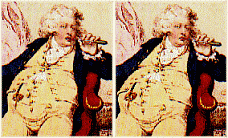 George III's elder sons were a troublesome bunch, brutal, dissolute and recklessly extravagant.
George was over-protective and continued to treat
his high-spirited eldest son as a child. Young George wrote to his brother Frederick in
1781: "I am sorry to tell you that the unkind behaviour of both their
Majesties, but in particular of the Queen, is such that it is hardly bearable."
One of their sisters later recalled how she had seen him and Prince Frederick "held
by their tutors to be flogged like dogs with a long whip". For some years the Prince
of Wales pleaded for a separate establishment and hoped to get his own way by embarrassing
his father through encouraging the opposition. Finally, when he was 21 years old, George
III was forced to grant his eldest son an income of his own.
George III's elder sons were a troublesome bunch, brutal, dissolute and recklessly extravagant.
George was over-protective and continued to treat
his high-spirited eldest son as a child. Young George wrote to his brother Frederick in
1781: "I am sorry to tell you that the unkind behaviour of both their
Majesties, but in particular of the Queen, is such that it is hardly bearable."
One of their sisters later recalled how she had seen him and Prince Frederick "held
by their tutors to be flogged like dogs with a long whip". For some years the Prince
of Wales pleaded for a separate establishment and hoped to get his own way by embarrassing
his father through encouraging the opposition. Finally, when he was 21 years old, George
III was forced to grant his eldest son an income of his own.
Nevertheless, relations between old and young George gradually became worse. It was as
though his parents' dull domestic way of living, and their constant criticism of his
extravagance, incited the Crown Prince to further dissipation and expenditure, just as his
father's faithfulness to a physically unappealing wife made it all the harder for the King
to bear the Prince's shamefully licentious behaviour with a succession of attractive and
amusing women2. In 1785 the Crown Prince (to the
right) secretly married the catholic widow Maria Smythe (1756-1837), known as
"Mrs. Herbert". As soon as George III found out, he had the marriage declared
invalid. Nevertheless, Prince Augustus twice married non-Royal women. Prince William
(1765-1837)4 had a long-lasting relationship with his
mistress Dorothea Bland (1761-1816), known as "Mrs. Jordan", which resulted in
10 illegitimate children. In 1791 Frederick of York married Frederica of Prussia
(1767-1820), a relative, and four years later the Prince of Wales and his cousin Caroline
of Brunswick (1768-1821)5 were united in an unhappy
marriage.
Meanwhile, the Princesses passed their lives in almost unimaginable dullness and they did
not even have a prospect of escape, because their parents did not want to be parted from
them and therefore rejected all offers of marriage. In 1797 the eldest Princess,
30-year-old Charlotte (1766-1828), in desperation married the extremely corpulent6 King Frederick of Württemberg (1754-1816), whose former
wife5 had disappeared under mysterious circumstances
after leaving her husband for ill treatment. Still, Charlotte was lucky. While the Royal
family as usual was on holiday at Weymouth in 1798 Princess Mary wrote: "This
place is more dull and stupid than I can find words to express". In 1808
38-year-old Princess Elisabeth (1770-1840) wrote: "We go on vegetating as we
have done for the last twenty years of our lives". The Princesses resented
their mother and none of them trusted her. The Princess Royal described the Queen as a
"silly woman", given to "violence and caprice", Mary commented upon
her "lack of warmth, tenderness and affection" and Elisabeth described her
mother as a "spoilt child".
Decline
Meanwhile, the Industrial
Revolution and mechanisation had brought loss of employment and social upheaval. The
Wilkes riots in the 1760s were followed by Keppel and Gordon riots in the 1770s. In 1786
George III was clumsily attacked with a knife. In 1794 a bolt passed right through the
King's carriage. In 1800 five shots ware fired during a review of the Grenadier Guards,
but they too missed the King. The same evening another man fired at George III, when he
entered the Royal box in the theatre. A person near the would-be assassin was able to
deflect his aim so that the bullet missed the King. George remained quite calm and turned
to the Queen and Princesses who were just entering the box, saying: "Keep back".
The audience cheered and sang "God Save the King!" three times.
At that time in Great-Britain Roman catholics were not permitted to vote, sit in
Parliament or hold a public office of any kind, but when Pitt the Younger proposed to
improve their rights early 1801, George strongly opposed it, maintaining that any change
whatsoever would violate his coronation oath. In February George said he had become
"bilious and unwell" and on the 25th his urine was dark coloured again. Poor
George did recognise the symptoms and remembered the treatments, purges, blistering and
strait-jackets, which had been applied to him during his previous illness, and said: "I
do feel myself very ill, I am much weaker than I was, and I have prayed to God all night
that I might die, or that he would spare my reason...". Cramp, constipation,
insomnia, a fast pulse, nausea, colic, muscular pain and weakness, and a feverish sweating
led to acute delirium culminating in coma. Again, his physicians feared for his life.
Again, his condition seemed to change day by day. The King was detained by force, but
luckily George slowly recovered.
Four years later the rheumatism, fever, swelling and nausea returned. George himself
called it a "rheumatic attack" and within a few days he became "too lame to
walk without a cane". His foot swelled, a fever followed and for a short while his
life was in danger. This time Dr. Samuel Foart Simmons (1750-1813), physician in a
hospital for lunatics, was summoned. He too had the King tied up in a strait-jacket. By
the middle of October George III had regained his sleep and lost much of his irritability.
During his illness Queen Charlotte had refused to sleep with her husband, but even after
his recovery she kept the Princesses constantly attending upon her and staying with her.
So George arranged to live separately, although they remained friends and appeared
together in public. His remaining complaint of "rheumatic pains" slowly passed
in 1805.
 In 1816 40-year-old Mary was finally allowed to marry her
tyrannical cousin "Silly Billy" of Gloucester. Elisabeth was nearly 48 years old
when she married Frederick VI of Hesse-Homburg (1769-1829) and, although he smelled and
bathed infrequently, the marriage was a happy one. As usual the Queen had fought as hard
as she could to prevent the marriage, but the Prince of Wales had given his consent. None
of the married Princesses had any children of their own, but in 1800 22-year-old Sophia
(1777-1848) had given birth to a son after a concealed pregnancy. The child's most likely
father was an equerry, Thomas Garth (±1744-1829), although some rumours mentioned
Sophia's notorious brother Ernest of Cumberland (1771-1851). Princess Augusta (1768-1840)
had romantic feelings for another middle-aged equerry, Sir Brent Spencer. The youngest
daughter, Amelia (1783-1810, to the right), was almost permanently ill from 1795
onwards. She fell madly, but hopelessly in love with the dull Sir Charles FitzRoy
(1762-1831)1, but in 1810 she was fatally ill with
tuberculosis. She wished to go to Kew, but the Queen forbade it, and while her sister Mary
was taking care of her, their heartless mother objected that it was "selfish of
Amelia to demand so much attention" from her sister.
In 1816 40-year-old Mary was finally allowed to marry her
tyrannical cousin "Silly Billy" of Gloucester. Elisabeth was nearly 48 years old
when she married Frederick VI of Hesse-Homburg (1769-1829) and, although he smelled and
bathed infrequently, the marriage was a happy one. As usual the Queen had fought as hard
as she could to prevent the marriage, but the Prince of Wales had given his consent. None
of the married Princesses had any children of their own, but in 1800 22-year-old Sophia
(1777-1848) had given birth to a son after a concealed pregnancy. The child's most likely
father was an equerry, Thomas Garth (±1744-1829), although some rumours mentioned
Sophia's notorious brother Ernest of Cumberland (1771-1851). Princess Augusta (1768-1840)
had romantic feelings for another middle-aged equerry, Sir Brent Spencer. The youngest
daughter, Amelia (1783-1810, to the right), was almost permanently ill from 1795
onwards. She fell madly, but hopelessly in love with the dull Sir Charles FitzRoy
(1762-1831)1, but in 1810 she was fatally ill with
tuberculosis. She wished to go to Kew, but the Queen forbade it, and while her sister Mary
was taking care of her, their heartless mother objected that it was "selfish of
Amelia to demand so much attention" from her sister.
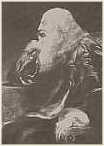 Around that time George III had another
relapse. "This one," he said, "is occasioned by poor
Amelia." He suffered from failing eyesight and aged rapidly. In 1811, shortly
after assuming the regency, the Prince of Wales was struck down by abdominal pain and
paralysis of the limbs. One of his doctors reported that he suffered "such agony of
pain all over him it produces a degree of irritation on his nerves nearly approaching to
delirium". While the regent recovered, George III's attacks came and went. He
suffered from short-term memory loss and senile dementia was setting in. "I
went down with the Queen," wrote Princess Mary, "and it was
shocking to hear the poor, dear King run on so, and her unfortunate manner makes things
worse." After 1812 the Queen left the duty of visiting her husband to her
children. Completely isolated from the outside world, King George was still subjected to
the well-meant, but barbarous treatment of his doctors.
Around that time George III had another
relapse. "This one," he said, "is occasioned by poor
Amelia." He suffered from failing eyesight and aged rapidly. In 1811, shortly
after assuming the regency, the Prince of Wales was struck down by abdominal pain and
paralysis of the limbs. One of his doctors reported that he suffered "such agony of
pain all over him it produces a degree of irritation on his nerves nearly approaching to
delirium". While the regent recovered, George III's attacks came and went. He
suffered from short-term memory loss and senile dementia was setting in. "I
went down with the Queen," wrote Princess Mary, "and it was
shocking to hear the poor, dear King run on so, and her unfortunate manner makes things
worse." After 1812 the Queen left the duty of visiting her husband to her
children. Completely isolated from the outside world, King George was still subjected to
the well-meant, but barbarous treatment of his doctors.
By 1817, George was going deaf, and the following year, he could no longer walk. He was
looking very old and thin. His only amusements were eating cherry tart and striking the
keys of his harpsichord. One day he said: "I must have a new suit of clothes and I
will have them black in memory of George III, for he was a good man." He had strange
delusions, was often in tears and sometimes he laughed wildly. But for the most part, he
would pass his days wandering restlessly from room to room or buttoning and unbuttoning
his waistcoat. Queen Charlotte died in November. George III had another violent outburst
with Christmas 1819, when he had no rest and talked continually. Then he began to refuse
his food and grew weaker. He died on January 29, 1820, at the age of 81.
Copyright © 1999, 2000 by J.N.W. Bos.
All rights reserved.
Footnotes
1 An illegitimate descendant of the Merry
King Charles II Stuart
2 Christopher Hibbert
3 In the 1960s Ida Macalpine and Richard Hunter recognised the symptoms.
Recently, John C.G. Röhl, Martin Warren and David Hunt have provided further evidence.
4 Later King William IV
5 A daughter of George III's sister Augusta
6 Napoleon maintained that God had created the King of Württemberg to demonstrate
the utmost extent to which the human skin could be stretched without bursting.
Bibliography
-
Hibbert, Ch.: George III (A personal history), Penguin Books, 1999
- Pain, N.: George III at Home, Eyre Methuen, 1975
- Plumb, J.H.: The First Four Georges, Fontana, 1977
-
MacAlpine I., Hunter, R.: George III and the Mad-Business, Allen Lane, 1969
-
Röhl, J.C.G., Warren, M., Hunt, D.: Purple Secret (Genes, 'Madness' and
the Royal Houses of Europe, Bantam Press, 1998
- Marples, M.: Six Royal Sisters (Daughters of George III), Michael Joseph,
1969
- Redman, A.: The House of Hannover, Alvin Redman London, 1960
-
Sinclair-Stevenson, Ch.: Blood Royal (The illustrious House of Hannover),
Book Club Associates, 1979
-
Denderfield, E.R. (ed.): Kings and Queens of England and Great Britain,
David & Charles, 1973
- Williamson, D.: Kings & Queens of Britain, The Promotion Reprint
Company, 1991
-
Fraser, A. (ed.): Lives of the Kings and Queens of England, Macdonald
Futura Publishers, 1980
-
Fraser, F.: The unruly Queen (The Life of Queen Caroline), MacMillan, 1996
-
Weir, A.: Britain's royal families (The complete genealogy), Pimlico, 1996
-
Ragsdale, H.: Tsar Paul and the question of madness (An Essay in History
and Psychology), Greenwood Press, 1988
Recommended Reading:
-
Kiste, J. van der: Georgian Princesses, Sutton Publishing, 2000
-
Hibbert, G.: George III (A personal history), Viking, 1998
- Pain, N.: George III At Home, Eyre Methuen, 1975
-
Parissien, S.: George IV (Inspiration of the Regency), St. Martin's Press, 2002
-
Plumb, J.H.: The First Four Georges, Fontana, 1977
- Friedman, D.: Inheritance (A psychological history of the royal family),
Sidgwick & Jackson, 1993
-
Röhl, J.C.G., Warren, M., Hunt, D.: Purple secret (Genes, 'Madness' and the Royal
Houses of Europe), Bantam Press, 1998
-
Rushton, A.R.: Royal Maladies: Inherited Diseases in the Ruling Houses of Europe, Trafford Publishing, 2008.
New!
-
Potts, D.M., Potts, W.T.M.: Queen Victoria's Gene (Haemphilia and the Royal Family),
Allan Sutton, 1995
-
Sack, G.H. jr.: Medical Genetics, McGraw-Hill, 1999
Recommended Videos on British History:
Content: Joan
Bos. Design: Klaas Vermaas.
Info: FAQ or
Mailing List.